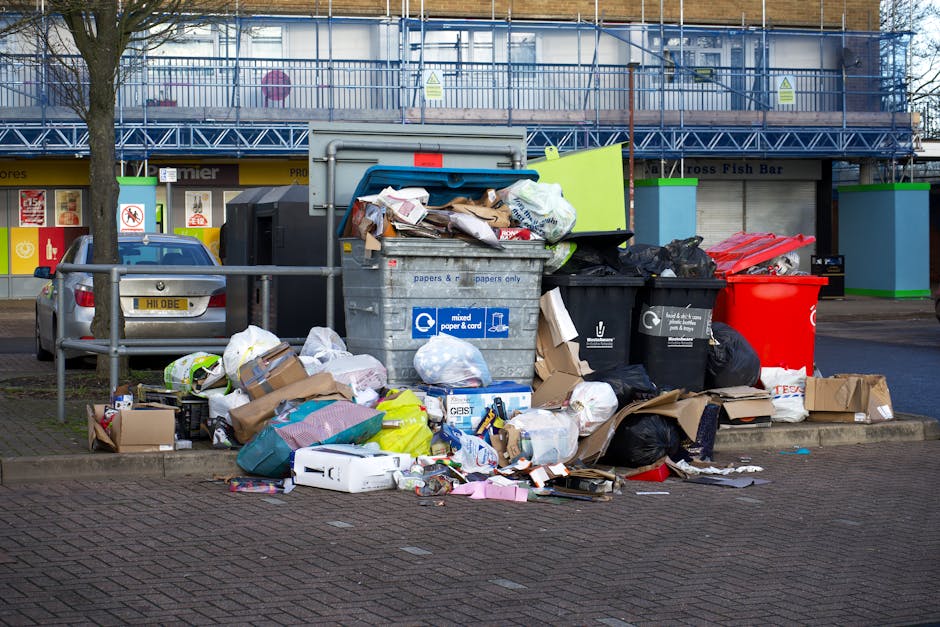
Rubbish clearance for tight access flats Hampstead Heath NW3
If you live in a tight access flat near Hampstead Heath NW3, rubbish clearance can feel oddly complicated for what should be a simple job. Narrow stairwells, awkward corners, shared entrances, parking restrictions, and neighbours who are trying to get past with a pram or a weekly shop - it all adds up. The good news is that Rubbish clearance for tight access flats Hampstead Heath NW3 can be handled cleanly and efficiently with the right planning, the right vehicles, and a team that knows how to work in confined London spaces without making a fuss.
This guide explains what the service involves, how it works in practice, where the common bottlenecks are, and how to choose a sensible approach for your flat. Whether you are clearing a single bulky item, a full one-bedroom flat, or a mix of old furniture and bagged waste, you will find practical steps here that save time and reduce stress. Let's face it, nobody wants to wrestle a sofa down a staircase at 7:30 on a wet Tuesday.
Table of Contents
- Why rubbish clearance in tight access flats matters
- How the clearance process works
- Key benefits and practical advantages
- Who this is for and when it makes sense
- Step-by-step guidance
- Expert tips for better results
- Common mistakes to avoid
- Tools, resources and recommendations
- Law, compliance, standards and best practice
- Options, methods and comparison
- Case study or real-world example
- Practical checklist
- Conclusion
- Frequently asked questions
Why Rubbish clearance for tight access flats Hampstead Heath NW3 Matters
Tight access changes everything. In a spacious house, rubbish clearance is mostly about lifting, loading, and disposal. In a flat with narrow hallways or split-level access, the job becomes a navigation exercise as much as a clearance task. One wrong move and you are scraping walls, upsetting neighbours, or delaying the whole collection.
In Hampstead Heath NW3, that matters even more because many buildings have older layouts, shared landings, limited turning space, and on-street parking that can make loading slower than people expect. A clearance that looks straightforward on paper can become a problem if the crew arrives unprepared. And if the item is heavy, awkward, or fragile, the risk of damage goes up fast.
There is also the practical side. A cluttered flat can make daily life feel tighter than it already is. Bags building up by the door, furniture blocking a corridor, or old appliances sitting in the kitchen can turn a normal afternoon into a little obstacle course. Clearing it out restores space, yes, but also calm. You can breathe again. That counts.
Expert summary: In tight access flats, the best rubbish clearance is not the fastest on paper; it is the one that moves carefully, protects the building, keeps neighbours happy, and finishes without drama.
How Rubbish clearance for tight access flats Hampstead Heath NW3 Works
The process usually starts with a quick assessment. That may be a description over the phone, a photo, or an on-site look if the access is especially tight. The goal is simple: understand what needs removing, how it can safely leave the flat, and whether anything needs dismantling before removal begins.
For tight access flats, the detail matters. A wardrobe that is easy to carry in a hallway with generous corners may be impossible to turn through a narrow landing. A large sofa may need to be split down before it can be moved. Even bin bags can take more time than expected if the lift is tiny or the stairs are steep and twisty. Sounds small, but these are the things that slow a job down.
A typical clearance will involve:
- checking access from flat to street or loading point
- identifying bulky items, loose waste, and fragile pieces
- deciding whether furniture needs dismantling
- protecting walls, bannisters, and floors where needed
- loading waste efficiently into the vehicle
- sorting items for reuse, recycling, or disposal where possible
If you are clearing a flat after a move, a tenancy end, or a downsizing project, the service often overlaps with flat clearance. If there are larger household items involved, furniture disposal or even sofa removal may be the most practical route.
One useful point: tight access jobs often run smoother when the order of removal is planned in advance. The first item out should not be the one blocking everything else. Obvious, perhaps, but you would be surprised how often that gets missed.
Key Benefits and Practical Advantages
The biggest benefit is reduced stress. That sounds generic until you have actually tried to move a chest of drawers through a narrow stairwell while balancing a door open with one foot. Then it feels very real. A professional clearance approach takes the heavy lifting and the awkward judgement calls off your plate.
Here are the practical advantages that matter most in tight access flats:
- Less risk of damage: Skilled removal reduces the chance of scuffed walls, broken fixtures, or damaged furniture.
- Faster completion: Proper planning cuts down on repeated trips and avoidable delays.
- Better neighbour relations: A tidy, controlled job is much less disruptive in a shared building.
- Safer handling: Bulky items and heavy bags are moved with the right technique, not with guesswork.
- Flexible support: You can clear one item, a room, or an entire flat depending on what you need.
There is also a cost-saving angle, though not always in the way people first expect. A well-organised clearance can be cheaper than hiring a service that arrives unprepared and then needs extra time, extra labour, or a second visit. Preparation really does pay off here.
If the flat clearance includes old office chairs, paperwork, or items from a home-based workspace, it may also overlap with office clearance or home clearance. A good provider should be able to adapt the job rather than force everything into one rigid category.
Who This Is For and When It Makes Sense
This kind of service is ideal for people living in buildings where access is the main complication, not the rubbish itself. That includes top-floor flats without a lift, converted houses with tight staircases, mansion flats with narrow communal areas, and small apartments where bulky furniture has to pass through awkward internal layouts.
It also makes sense if you are:
- moving out and need a fast end-of-tenancy clear-up
- clearing a rental property for new tenants
- replacing old furniture in a compact flat
- dealing with bagged rubbish after a refurbishment or declutter
- helping a relative clear a home where access is not easy
- getting rid of mixed items after storage overflow, garden work, or a room re-set
For more general load-ups and mixed waste, rubbish removal and waste removal can be a better fit than trying to force everything into a one-item approach. If your job includes collected rubbish in sacks or loose items from a spring clean, rubbish collection is another relevant option.
Truth be told, the right service is less about the label and more about access, volume, and what has to physically get out of the building. That is the real decision point.
Step-by-Step Guidance
If you want the job to go well, a little structure goes a long way. Here is the practical flow we would recommend for a tight access flat.
- List every item to be removed. Include furniture, bags, appliances, mattresses, and awkward extras like mirrors or shelves.
- Measure the difficult bits. Stair width, landing turns, door frames, lift dimensions, and any low ceilings all matter.
- Take photos. A quick photo of the hallway, stairs, and bulky items can save a lot of back-and-forth.
- Separate what stays and what goes. It sounds basic, but it avoids the classic "that box was meant to stay" moment.
- Prepare the route. Clear shoes, prams, plant pots, and anything else from the path out.
- Book the right type of service. If there are many items, ask for a flat clearance approach rather than a single-item pickup.
- On the day, keep access open. Door buzzers, parking access, and building rules should all be ready before the crew arrives.
- Walk through the job at the start. A two-minute briefing can prevent a half-hour misunderstanding. Easy win.
For large furniture, consider whether dismantling will help. Sometimes it does, sometimes it does not. A bed frame or wardrobe may come apart neatly; a solid old cabinet may not. This is where experience helps, because forcing the issue tends to make things worse, not better.
Expert Tips for Better Results
Small decisions can make a huge difference in confined spaces. A few habits, honestly, save more hassle than most people realise.
- Start with the hardest item first. If the biggest item can fit, everything else will usually follow more easily.
- Protect the route. Cardboard, blankets, or corner guards can save walls from scuffs and knocks.
- Keep a clear landing zone. If the item has nowhere to be set down near the exit, the job becomes stop-start and messy.
- Use the right number of hands. Two people may be enough for some jobs, but bulky or top-heavy items often need more control.
- Check the building rules early. Some flats have access windows, loading times, or quiet-hour expectations that should be respected.
- Choose timing wisely. Mid-morning can be calmer than early rush hour, especially if parking is difficult nearby.
A small real-world observation: in older London flats, it is often the doorway, not the staircase, that causes the headache. Doors swing oddly, frames are tighter than they look, and a bulky item can catch at a slightly awkward angle. That one catch can change the whole rhythm of the job.
If you are dealing with mixed materials, not just household rubbish, it can help to look at the broader waste clearance approach rather than trying to sort everything into one pile on the spot. It keeps the process calmer and usually more efficient.
Common Mistakes to Avoid
The most common mistake is underestimating the access. People often focus on the rubbish volume and forget the building layout. Then the crew arrives and discovers a narrow turn, no parking nearby, and a lift that is, well, basically decorative. Not ideal.
Other mistakes to watch out for:
- Booking without measurements: Guessing the size of a sofa or wardrobe is risky in tight spaces.
- Not clearing the route: A cluttered hallway slows everything down and increases the chance of damage.
- Leaving the heavy item until last: Once the easier items are out, the final bulky piece may be harder to manoeuvre.
- Assuming all waste is the same: Some items need separate handling, especially if they are electrical, damaged, or mixed with building debris.
- Forgetting building rules: Shared entrances, resident access, and parking arrangements can matter more than you think.
A second mistake is trying to save money by choosing the wrong method. A cheap-looking plan that fails halfway through is not cheap. It is just delayed. Better to be realistic from the beginning.
Tools, Resources and Recommendations
You do not need a van full of gear to prepare for a clearance, but a few simple tools help a lot. Think practical, not overcomplicated.
- Measuring tape: Useful for checking doorways, stair turns, and item dimensions.
- Heavy-duty bags: Good for loose waste, clothing, and light mixed rubbish.
- Blankets or coverings: Helpful for protecting surfaces and softening contact points.
- Marker labels: Great if you are separating items into keep, remove, donate, or recycle piles.
- Screwdriver or basic toolkit: Handy when a bed frame, table, or shelving unit needs dismantling.
For moving large household items in cramped corridors, specialist removal is often easier than trying to DIY it. If the job is mainly about old household furniture, furniture disposal and house clearance may also be worth considering depending on the size and complexity of the load.
If your clearance is part of a larger tidy-up that includes outdoor overflow, a garage, or a storage area, related services such as garage clearance, home clearance, or builders waste can be relevant. The right mix depends on what is actually leaving the property.
Law, Compliance, Standards and Best Practice
Any rubbish clearance should be handled carefully and responsibly. In the UK, you should be confident that waste is dealt with by a provider that follows proper disposal practices and does not just tip everything into the nearest skip or, worse, leave it unclear where it ends up. That is not the standard you want.
As a customer, your best practice is to ask sensible questions before the job begins. For example:
- How will the waste be handled?
- Can recyclable materials be separated where practical?
- What happens to bulky furniture or electrical items?
- Are there any items you cannot take?
You do not need to become a compliance expert, but you should feel comfortable that the job is being done properly. In shared buildings, it is also best practice to avoid blocking entrances, damaging common areas, or creating unnecessary noise during unsociable hours. A calm, respectful approach goes a long way in Hampstead Heath NW3, especially where neighbours are close and communal spaces are shared.
If you are comparing services, read the terms and conditions carefully and check the provider's general service information on about us. That helps set expectations before anyone arrives at the front door.
Options, Methods, and Comparison Table
Not every clearance needs the same approach. Sometimes one item is enough. Sometimes the whole flat needs clearing. Here is a straightforward comparison to help you choose.
| Method | Best for | Strengths | Limitations |
|---|---|---|---|
| Single-item removal | One bulky object such as a sofa, mattress, or appliance | Simple, fast, good for small jobs | Not ideal if the flat has multiple items or mixed waste |
| Flat clearance | Multiple rooms, end-of-tenancy jobs, full declutters | Efficient for larger loads and mixed items | Requires more planning in tight access buildings |
| Rubbish collection | Bagged waste, loose waste, light mixed rubbish | Flexible and convenient | Less suitable for large furniture or heavy items |
| Waste removal | Mixed household waste or combined clear-outs | Broad, practical, adaptable | May need extra preparation if items are awkward or oversized |
For many NW3 flats, flat clearance is the most efficient route because the real issue is not just the rubbish itself; it is how the rubbish gets out. That distinction matters more than people expect.
Case Study or Real-World Example
A recent-type scenario that comes up often is a second-floor flat with a narrow communal staircase and no lift. The resident had a broken wardrobe, two armchairs, several black bags, and a small coffee table to remove before moving out. On paper it sounded like a short job. In practice, the wardrobe was the problem.
The crew measured the stair turns first, then checked whether the wardrobe could be dismantled inside the flat. It could, though only just. The doors were removed, shelves taken out, and the frame broken down into manageable sections. The bags were moved first so the route stayed open, and the heavier pieces followed once the landing was clear. The whole thing took longer than a simple pickup, but it finished without damage and without annoying the neighbours. That is what good access planning does. Quietly saves the day.
Nothing dramatic. No heroic music. Just a tidy result, which is usually what people actually want.
Practical Checklist
Use this checklist before the crew arrives or before you decide which service to book.
- List every item that needs removing
- Measure doors, stairs, and tricky corners
- Take clear photos of access points
- Check if any item needs dismantling
- Clear the hallway, landing, and exit route
- Confirm parking or loading access
- Separate keep, donate, recycle, and remove piles
- Check building rules or quiet-hour restrictions
- Make sure lift access, if any, is working
- Keep pets and children away from the route during removal
- Ask what types of waste can be taken on the day
If you can tick most of those off, the clearance is already in much better shape. Honestly, preparation makes tight access jobs feel half as difficult.
Conclusion
Rubbish clearance for tight access flats in Hampstead Heath NW3 is not just about taking waste away. It is about removing it carefully, planning around the building, and doing the job in a way that respects both your home and the people who live around you. When the access is awkward, the details matter. A lot.
With the right planning, the right removal method, and a clear understanding of what needs to leave the property, even a cramped flat can be cleared efficiently and without drama. Whether you need a one-off bulky item removed or a broader rubbish clearance service, the sensible approach is always the same: measure first, plan properly, and keep the route open.
And if the job feels a bit much, that is completely normal. Tight access can make even a small clearance feel complicated. But once it is done, the difference is immediate: more space, less clutter, and a calmer flat. That alone can change the mood of a place in a single afternoon.
Get a free quote today and see how much you can save.
Frequently Asked Questions
Can rubbish clearance be done in a flat with very narrow stairs?
Yes, in many cases it can. The key is checking the access first and deciding whether the item can be carried out safely, dismantled, or removed in sections. Narrow stairs are common in London flats, so experienced teams usually plan for that.
What counts as tight access for rubbish removal?
Tight access usually means anything that makes movement awkward: narrow staircases, small landings, sharp turns, low ceilings, restricted parking, or a lift that is too small for bulky items. It is less about a single measurement and more about how the whole route works.
Do I need to measure my furniture before booking?
It helps a lot, especially for sofas, wardrobes, bed frames, and large cabinets. Even rough measurements are useful. If you are unsure, photos can be just as helpful because they show shape, clearance, and likely turning points.
Is flat clearance better than individual item removal for cramped flats?
Often yes, especially if you have multiple items or mixed waste. Flat clearance is usually more efficient when access is awkward because the team can plan the route and load order as one job rather than several separate visits.
Can you remove furniture without damaging walls or bannisters?
That should always be the aim. Proper handling, route protection, and sensible planning reduce the risk. No one can promise zero risk in every building, but careful removal makes damage much less likely.
What should I do before the clearance team arrives?
Clear the route, separate the items, and make sure access is ready. If possible, move small objects, open doors, and check parking or entry instructions. A little prep makes the whole job quicker and smoother.
How long does a tight access clearance usually take?
It depends on the number of items, the route, and whether anything has to be dismantled. A single item may be quick, while a full flat can take longer than expected. Tight access tends to slow things down a bit, and that is normal.
Can mixed rubbish and furniture be taken together?
Usually yes, provided the team is set up for mixed loads. That is why services like waste removal or furniture disposal can be useful when your flat has both bulky items and bagged waste.
What if my building has no lift?
No lift is common and not usually a problem on its own. The main issue is whether the stairs, landings, and doorways allow safe movement. If the building is older or the staircase is especially tight, it helps to share photos in advance.
Are there any items that cannot be removed with general rubbish clearance?
Some items may need separate handling depending on their type, condition, or local disposal rules. It is always best to ask before the job. Clear communication avoids surprises on the day, which is what everyone wants really.
Is same-day rubbish clearance possible in Hampstead Heath NW3?
Sometimes, yes, depending on the size of the job, the time of day, and how complex the access is. Tight access can make same-day work trickier, so it is better to give as much notice as you can if the job is large or awkward.
How do I know whether I need rubbish removal or waste collection?
If you have bulky, mixed, or awkward items, rubbish removal may be the better fit. If you mainly have bagged waste or smaller loose items, waste collection can be enough. When in doubt, describe the contents and the access, and the right option usually becomes clear quickly.